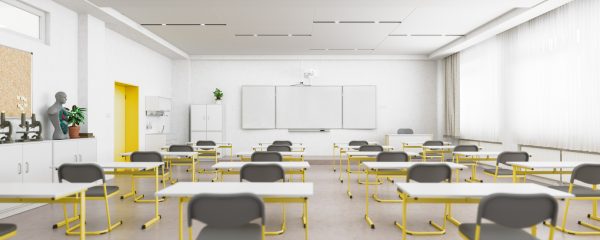
All across the globe, despite the growth of student populations, educational infrastructure has been on a steady decline. Educational systems everywhere are now under increasing pressure to provide safer, more flexible, and cost-effective learning environments. In a world where traditional construction methods are often too slow, expensive, and disruptive to the learning experience, school systems are turning to modular classrooms as a compelling solution.
These portable classrooms for schools offer students more than just a temporary fix. Today, they are at the forefront of educational space solutions, offering schools a flexible, sustainable, and rapidly deployable option. Thanks to the many advances in design and manufacturing processes, modular construction is now becoming a long-term answer to this increasingly complex problem.
The Pressure of Student Growth
Perhaps one of the biggest drivers of the growing modular classroom trend is the steady increase in student enrollment. You will find that in both developed and developing nations, urban migration and population growth are placing incredible amounts of stress on the existing educational infrastructure.
In the US, for example, the National Center for Education Statistics has projected a consistent increase in primary school enrollment over the past decade. These trends can also be seen in the United Kingdom, Australia, and parts of Africa and Asia. Schools around the world are struggling to accommodate the influx of students every year.
Building traditional classroom extensions is nowhere near fast enough to respond to this increased growth. There are issues with permits, funding delays, weather, and construction schedules that can drag out a project for many months, if not years. All the while, students are left learning in overcrowded, makeshift environments. More and more school systems around the globe are choosing modular classrooms because they can be delivered and operational in a fraction of the time and cost.
What Are Modular Classrooms?
Modular classrooms are quickly becoming the most popular option for school systems everywhere. They are prefabricated structures that are manufactured off-site before being transported to the final destination. Today’s modular classrooms are not like the temporary trailers that were used decades ago. Rather, they are engineered for durability, comfort, and long-term use.
These units can be easily customized to match the aesthetic and functional needs of the existing buildings within the school, and even include HVAC systems, smart boards, and Wi-Fi integration. Best of all, they are designed with flexibility in mind—that is, they can be easily scaled up, down, reconfigured, and relocated as the needs of the school change.
So, whether a school is looking to expand quickly, accommodate new special programs, or plan for future demographic changes, modular construction offers the most efficient and adaptable solution available today.
Key Benefits of Modular Classrooms
Minimal Disruption to Learning
With so many benefits, one of the most profound and often overlooked is the lack of disruption to daily school operations. While traditional construction can introduce months of noise, dust, restricted access, and even safety concerns, modular classrooms are delivered in a nearly ready-to-occupy state.
By manufacturing the modular buildings off-site, the vast majority of the construction noise and activity happens elsewhere. As a result, the new units can be installed quickly and efficiently over a holiday break or weekend. This helps to minimize the impact on students, teachers, and parents alike.

As the students learn uninterrupted during the academic year while most of the construction is done in a yard or modular factory.
Speed of Deployment
Then there is the speed of deployment. Modular buildings can be quickly designed, constructed, and installed. Sometimes, this can be accomplished up to 50% faster than with traditional builds. As the units are fabricated off-site, a separate team can prepare the site for delivery, nearly halving the time spent on the project.
This is extremely important, especially for schools that are facing urgent space shortages. The speed of deployment is not just convenient—it can mean the difference between maintaining educational standards and falling behind.
Cost-Effective and Budget-Friendly
Of course, we can’t talk about modular classrooms without also discussing their cost-effectiveness. After all, cost is one of the biggest considerations for any school district. While traditional construction is often hampered by delays and overruns, modular construction can ensure that the project stays well within its tight budget.
With modular buildings, you have predictable pricing thanks to the reduced cost of on-site labor and minimal delays. This makes choosing them a smart investment, especially in regions where there is limited funding for public education.
In some areas, modular classrooms can also qualify for government funding or be financed through lease agreements. This helps to ease the financial burden on school administrators.
Sustainable and Eco-Friendly
Best of all is the sustainability of modular classrooms. These classrooms can be constructed with significantly less waste than traditional methods. At the same time, manufacturers make use of recyclable and renewable materials in the construction process, which helps to make them an eco-friendly option.
Compared to traditional construction methods, modular classrooms often feature some of the most advanced energy-efficient insulation options available on the market today, and can even include solar panel integration and eco-conscious HVAC systems. This helps schools to meet green building certifications and lower their long-term energy costs.
Adaptability and Scalability
Of course, we can’t forget the adaptability and scalability of modular construction. These classrooms are extremely flexible, which allows schools to expand, reduce, or repurpose their units with ease. With very little effort, a classroom can be converted into a laboratory, office, or even a library.
Additionally, the units can be moved from one campus or district to another as enrollment patterns shift from year to year. This provides educational providers with the agility they need to keep ahead of population shifts.

Real-World Applications
All over the world, modular classrooms are helping schools overcome space constraints. Let’s take a closer look at several different real-world applications:
United States
In Stamford, Connecticut, four new modular classrooms were installed at the Catholic Academy of Stamford in order to accommodate the increase in student enrollment, especially in pre-K to middle school. These new modular units cost the school around $1 million and included a science lab, art room, and additional classroom space.
https://www.stamfordadvocate.com/news/education/article/stamford-catholic-academy-20245986.php
Australia
The Victorian government has made a commitment to upgrade every school in the state by 2028. They have allocated A$148 million for portable classrooms. The initiative aims to address the overcrowding of the school systems and improve aging school facilities across the state.
https://www.budget.vic.gov.au/investing-our-kids-and-their-classrooms
Philippines
In the Central Visayas region of the Philippines, the Association of Concerted Teachers submitted a request a few years ago to implement modular classes in order to combat the increasingly higher heat indexes being experienced across the island nation.
United Kingdom
Then you have the Ingfield Manor School in West Sussex, which collaborated with PF Modular in order to create Special Educational Needs classrooms to meet the growing demand for childcare placements in their district.
Addressing the Myths: Are Modular Classrooms Temporary?
But let’s face it, there are still a lot of myths and misconceptions about modular classrooms. One of the biggest myths still in circulation today is that modular classrooms are only suitable for temporary use. This misconception has its roots in earlier models that were used by school districts back in the 80s and 90s. These units were often rudimentary and short-lived. Today’s modular solutions easily rival traditional building techniques in terms of durability, comfort, and lifespan.
With the right maintenance, a modular classroom can actually last a school for more than 30 years. They are designed to meet and exceed local building codes and can be integrated seamlessly with the existing school architecture. They are not just a stopgap—they are a sustainable, long-term solution for any school district.
Enhancing the Educational Experience
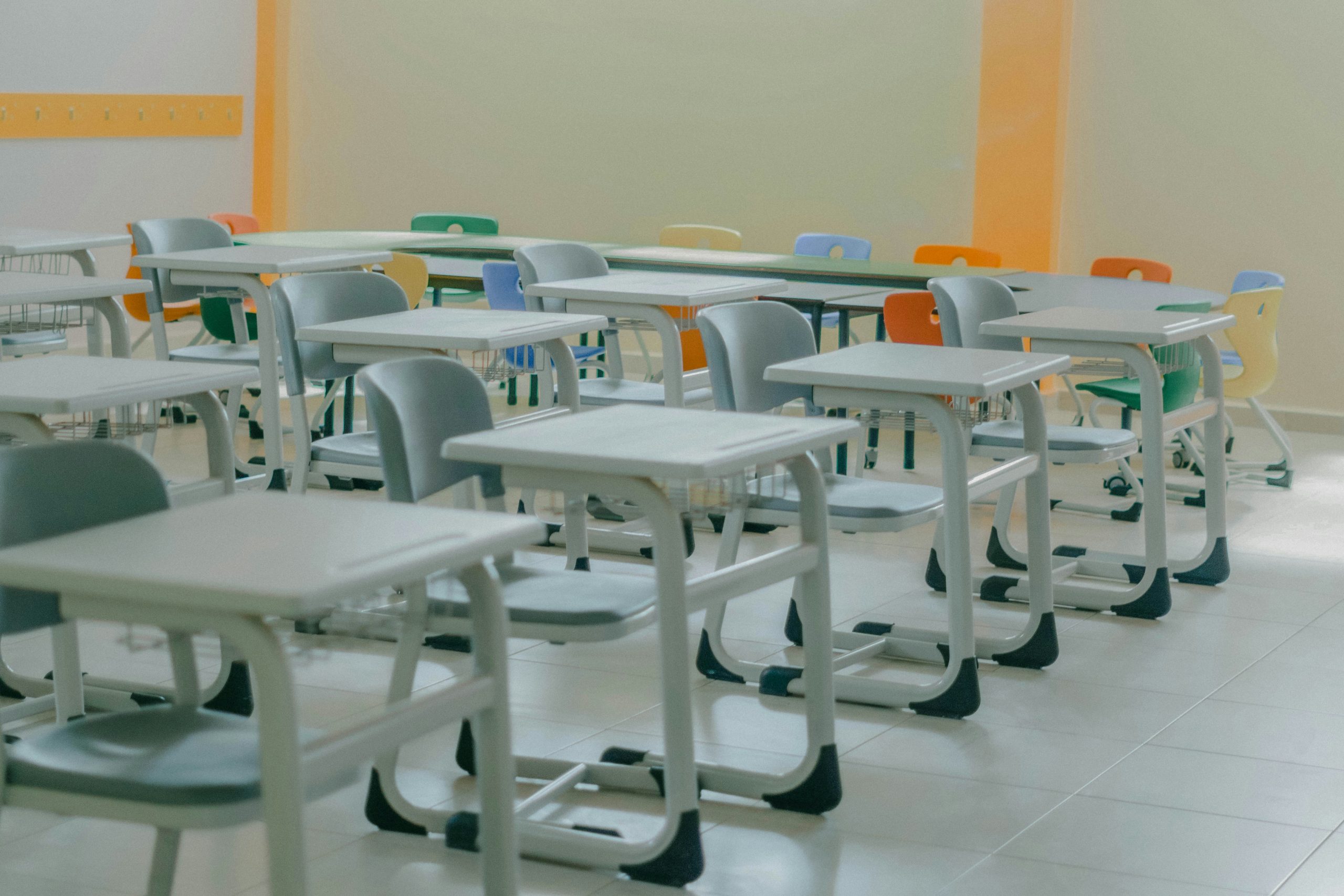
It’s important to think beyond the practical considerations that modular classrooms bring to a school district. One of the biggest advantages is the enhanced learning experience. These bright, modern interiors provide students with ample natural light and integrated technology to create inviting spaces that promote student engagement.
Conclusion: A Smarter Way Forward
Today, the global education system faces an undeniable challenge: how to meet the growing student demand with the limited time, space, and budgets that many school districts have to operate under. This is where modular classrooms really stand out. They are quickly proving to be one of the most innovative and impactful answers to this dilemma.
Thanks to their cost-efficiency, speed, minimal disruption, and environmental sustainability, modular classrooms are more than just a convenience—they are a transformational tool for the future. As the world continues to look for smarter, faster, and more flexible ways to invest in the next generation, modular construction stands out as the perfect solution.